Can LPR Support Public Safety Without Compromising Privacy?


At recent industry events, one fundamental question was raised by public safety leaders, city officials, and community members alike: How do we balance effective public safety with community privacy when deploying License Plate Recognition (LPR)?

License Plate Recognition (LPR) is a powerful tool for modern public safety and traffic management. Yet, misconceptions about how data is handled can create hesitation.

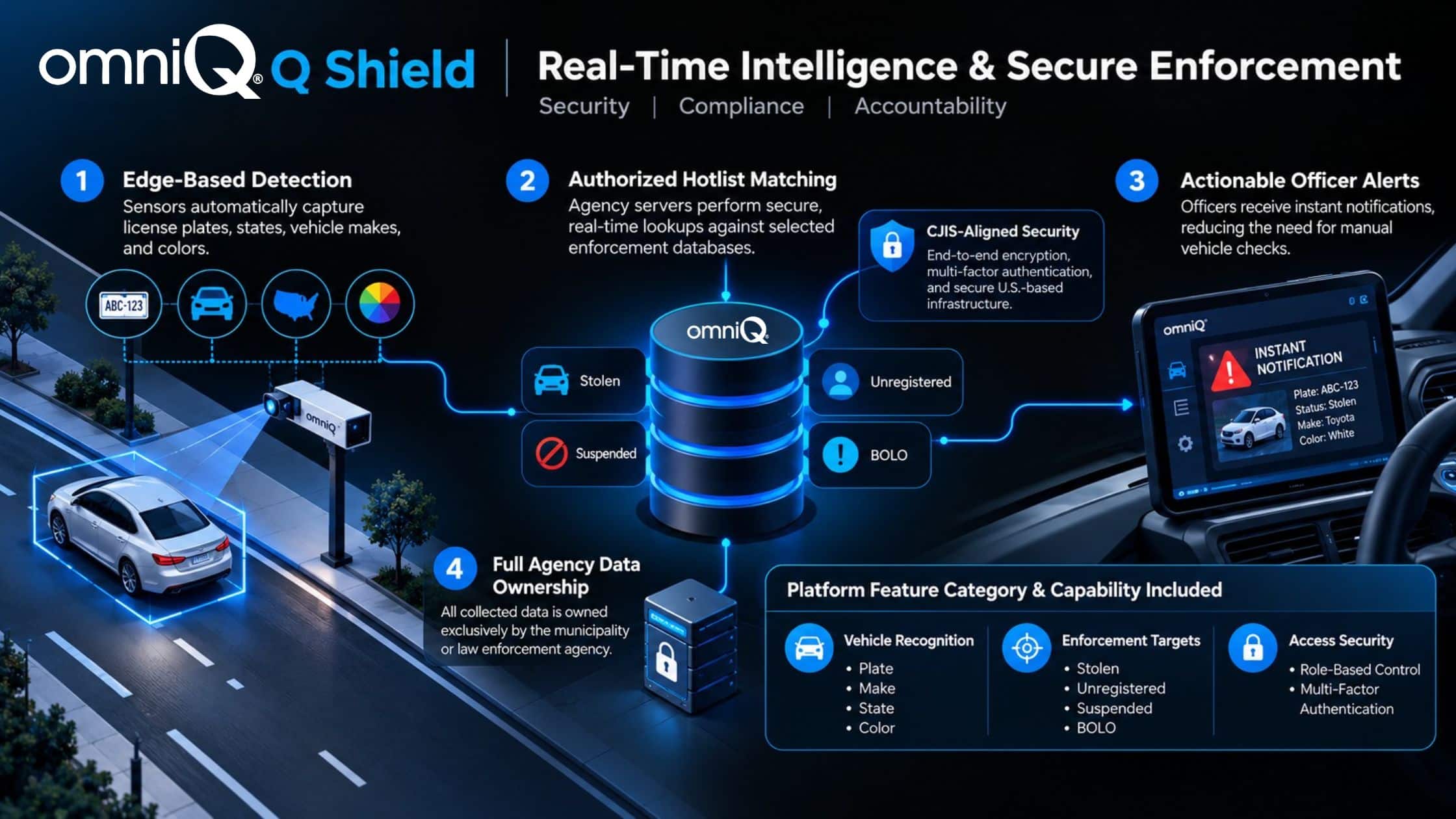
Through our QShield™ program, we prove that public safety and privacy rights do not have to be at odds. It starts with clear limits on data ownership, access, and enforcement.

Here is how we separate ALPR fact from fiction based on our latest whitepaper:

1. Agencies Retain Total Data Ownership

  • Fiction: “Our community’s data becomes part of a commercial or nationwide search network.”

  • Fact: Your agency maintains 100% ownership and control. Data exists solely between the agency and authorized state entities. The technology provider does not own, retain, or monetize your agency’s data, nor is it ever automatically shared without explicit authorization.

2. Official Sources Only

  • Fiction: “Plate readers fuse vehicle data with commercial profiles and third-party identity sources.”

  • Fact: Systems rely strictly on official state and law enforcement databases (such as vehicle registration and active BOLO lists). Commercial data brokers and third-party aggregators are completely excluded.

3. Strict, Configurable Retention & Purging

  • Fiction: “Vehicle data is stored indefinitely in a hidden database.”

  • Fact: Data is retained only for as long as local policy permits in a secure database. By default, records are purged automatically after 30 days. Agencies retain full authority to adjust this timeline to align with local regulations and legal standards.

4. Mandatory Human Oversight

  • Fiction: “The system automatically issues citations and enforces laws.”

  • Fact: Technology assists with real-time detection, but humans make the final decisions. A sworn officer or authorized administrator must review and approve every potential match before any enforcement action is taken.

5. Built-In Transparency & Community Trust

  • Fiction: “LPR operations lack accountability and public visibility.”

  • Fact: Every system action creates a clear, transparent audit trail. Furthermore, communities are supported with accessible options and public-facing capabilities for resident adjudication, appeals, and remediation ,fostering long-term trust between law enforcement and the public.

Smart Technology Built on Trust

When residents or city leaders ask how LPR technology works, transparency is the best policy. Clear safeguards ensure that adopting modern safety solutions strengthens community trust rather than challenging it.

Ready to dive deeper?

Read our full Whitepaper

Learn more about QShield™ and our Public Safety Solutions